The Complete Guide to Cutting and Lighting Cigars (V-Cut vs Straight vs Punch)
Master the cut and light: straight guillotine vs deep V-cut vs punch, cutting torpedos, toasting the foot with butane or matches, and avoiding ruined wrappers. UK guide.
How do you cut and light a cigar properly?
To cut a cigar, slice only 2 to 3mm off the head above the shoulder seam using a sharp double guillotine or deep V-cutter to keep the cap intact. To light, toast the foot with an odourless butane flame held an inch away while rotating the cigar, then gently draw while continuing to turn until an even, glowing orange cherry forms.
- Never cut below the shoulder: the cap holds the wrapper leaf together under tension, and cutting too deep causes the cigar to unravel
- A deep V-cut is ideal for 50+ ring gauge cigars because it creates a wide draw funnel without flattening or crushing the head
- Never put the flame directly on the tobacco leaf: hold the heat 2–3 centimetres away and let ambient radiant heat toast the foot
- Only use odourless triple-refined butane, cedar spills, or wooden matches allowed to burn down past the sulphur head
- Never use a petrol lighter (such as a Zippo) or a scented candle, which permanently fouls the tobacco with chemical petrol taints
The anatomy of the cap and why cuts go wrong
Every handmade cigar is closed at the head by a small piece of wrapper leaf called the cap. On Cuban cigars, rollers apply a traditional 'triple cap' consisting of three overlapping layers of leaf glued with vegetable gum (gomma). New World cigars from Nicaragua and the Dominican Republic typically use a single or double cap.
Beneath the cap is the 'shoulder' — the curved curve where the straight barrel of the cigar turns into the head. The single rule that governs every cut is simple: stay above the shoulder seam. The cap exists to keep the wrapper leaf under tension. If you slice below the seam line, you remove the anchor holding the wrapper down. Within five minutes of smoking, warmth and saliva will cause the outer leaf to peel away like an orange rind in your fingers.
You only ever need to remove a disc of tobacco two to three millimetres deep. The filler leaves inside are aligned longitudinally; once the cap is opened, air travels freely through the entire bunch. Slicing off half an inch does not improve the draw; it only guarantees the cigar falls apart.
Straight guillotine vs deep V-cut vs punch
There are three primary cutters, each suited to different formats and smoking styles:
1. Double-Blade Guillotine: The universal standard. Two spring-loaded surgical stainless steel blades slide inward from opposite sides, applying equal pressure so the delicate wrapper leaf is sliced rather than pinched. Avoid single-blade guillotines, which press the cigar against a dull flat anvil and frequently crack brittle wrappers.
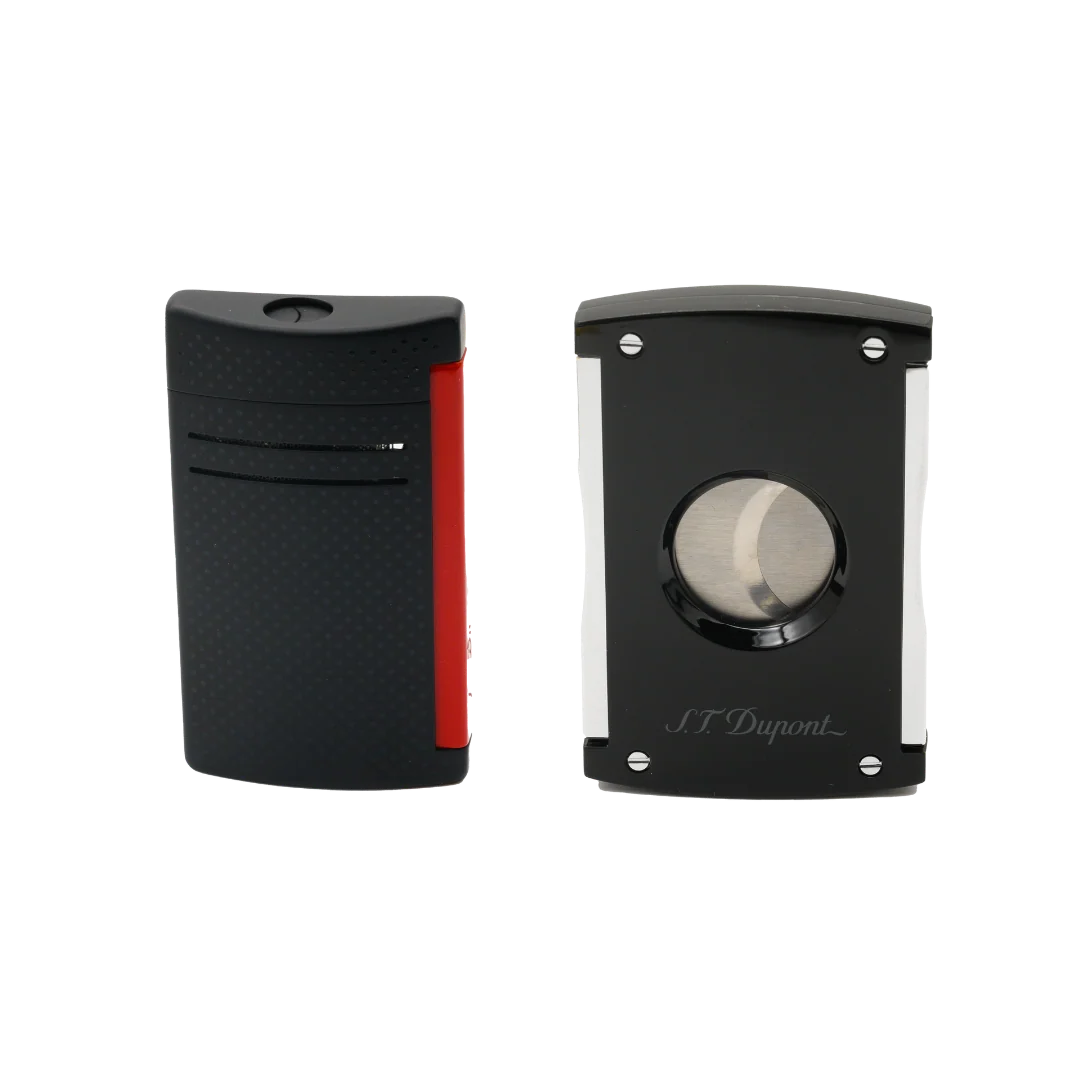
2. Deep V-Cutter: Modern V-cutters (popularised by Colibri and Xikar) cut a neat, inverted wedge through the head. The V-cut is exceptionally forgiving because the blade guides itself, making it almost impossible to cut too deep. It is especially effective on large 50+ ring gauge cigars (Robustos, Toros, and Gordos), concentrating the smoke onto the centre of the tongue while leaving the structural perimeter of the cap intact.
3. Punch Cutter: A circular cylindrical blade that cores a small round hole in the centre of the cap. Punches preserve the exact round shape of the head, feel comfortable between the lips, and leave virtually zero loose tobacco flakes. However, punches cannot be used on torpedoes or pointed figurados, and on thick-gauge cigars with rich oily fillers, heavy tars can condense around the narrow aperture towards the final third.
Cutting shaped cigars: Torpedos, Piramides, and Belicosos
Figurados — cigars with tapered, conical heads — cannot be punched and require deliberate attention with a straight guillotine.
Because the taper is steep, novice smokers often cut off too much of the tip in an effort to open up the draw, destroying the elegant mouthpiece crafted by the torcedor. Start by trimming just 3 to 4 millimetres off the tip. Take a test draw. If the resistance feels like drawing a thick milkshake, trim another 2 millimetres.
Many veteran British smokers cut torpedos on a sharp 45-degree angle (often called an 'angle cut' or 'Dickman cut'). Slicing at an angle creates a larger surface area of exposed filler without requiring a deep horizontal cut, and allows you to direct the rich stream of smoke directly against the roof of the palate or tongue as you hold the cigar.
What to do when you do not have a cutter
If you find yourself without a cutter, do not chew or bite the cap off. Biting compresses the filler, shreds the delicate wrapper, and leaves your mouth full of bitter loose tobacco crumbs.
If you have a pocket knife or kitchen paring knife, ensure the blade is razor sharp. Lay the cigar flat on a clean, solid cutting board. Place the blade 2mm above the cap line and gently roll the cigar under the blade with light pressure, scoring through the wrapper leaf in a complete 360-degree circle before popping the circular disc off.
If you are smoking a Cuban cigar with a genuine triple cap and have no tools whatsoever, you can use your thumbnail. Firmly press the edge of your thumbnail into the edge of the circular cap seam and trace around the perimeter. The natural vegetable gum will release, allowing you to peel the top cap off cleanly while preserving the underlying layers.
Lighting fuels: Butane torch, soft flame, matches, and cedar spills
What you light your cigar with fundamentally dictates how your first third will taste. Tobacco is intensely hygroscopic and porous; it absorbs whatever volatile chemicals are present in the lighting flame.
1. Triple-Refined Butane: Butane burns cleanly at high temperatures and is completely odourless. High-pressure jet flame (torch) lighters are windproof and provide pinpoint accuracy, making them ideal for outdoor smoking in the UK. Soft-flame butane lighters burn cooler, which helps prevent scorching delicate vintage wrappers.
2. Petrol Lighters (Zippo warning): Never light a premium cigar with a petrol-fuelled lighter. The naphtha fuel produces aromatic hydrocarbons that penetrate the raw tobacco leaves, leaving a sharp, oily petrol taste through the entire first half of the smoke.
3. Cigar Matches: Long wooden cigar matches provide a wonderful, gentle soft flame. However, you must let the chemical sulphur head burn completely away — wait three to four seconds until the flame begins consuming the bare white pine or aspen wood — before bringing the flame anywhere near the foot.
4. Spanish Cedar Spills: The purist's method. Lighting a thin strip of Spanish cedar wood (often found separating layers in cigar boxes) imparts an unmistakable woody fragrance and produces an even, low-temperature flame that cannot scorch the wrapper.
The two-stage lighting ritual
Properly lighting a cigar is an unhurried, two-stage process that ensures the foot burns evenly from the very first draw:
Stage 1: Toasting the Foot
Hold the cigar in your hand at a 45-degree angle. Bring your lighter flame to roughly 2 to 3 centimetres (one inch) away from the foot — do not allow the blue torch cone to touch the tobacco. Slowly rotate the cigar between your fingers. The ambient radiant heat will gently toast the foot, blackening the outer wrapper edge and turning the filler leaves into glowing charcoal. Toasting dries out residual moisture and ensures the filler and binder ignite uniformly.
Stage 2: Lighting on the Draw
Place the cigar between your lips. Bring the flame near the toasted foot again, holding it an inch away. Take slow, rhythmic puffs (pulling smoke into your mouth without inhaling) while continuously rotating the cigar. The vacuum created by your draw pulls the heat through the bunch.
Take the cigar from your mouth and blow gently onto the burning foot. Look at the face of the ash: it should display an even, glowing orange ring across the entire diameter. If any dark, unlit patches remain on one side, touch them up immediately with your flame.
Fixing burn issues: Canoeing, tunnelling, and relighting
Even perfectly rolled cigars occasionally burn irregularly due to wind, humidity pockets, or uneven draught:
1. Canoeing (Running): When one side burns significantly faster than the other. Catch it early. Hold the cigar so the lagging (slower-burning) side is positioned on the bottom; hot air rises, helping the slower side catch up. If the difference exceeds half an inch, use a butane torch to burn away the lagging wrapper until the burn line is square again.
2. Tunnelling: When the internal filler burns down into a hole while the outer wrapper refuses to burn. This usually occurs when the outer wrapper is too humid compared to dry filler. Knock the ash off and apply direct heat to the unburnt wrapper until the cherry is level.
3. Relighting etiquette: If your cigar goes out, tap off the loose ash gently. Purge the cigar by blowing gently through it to expel stale trapped smoke. Then toast the remaining dark carbon rim with your lighter until it glows, before taking your first gentle relighting puff. A cigar can be relit up to an hour or two after extinguishing; leaving an extinguished cigar overnight, however, allows stale creosote to saturate the leaf, ruining the flavour.